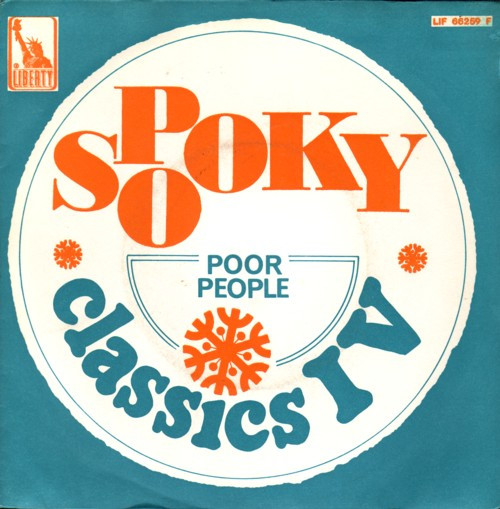
“Spooky” was originally an instrumental tune by saxophonist Mike Sharpe. It charted as an instrumental in 1967 hitting No. 57 in the US. One year later vocals were added by Dennis Yost and the song was re-released as by Classics IV. That’s the version featured above. This version went on to hit No. 3 in the USA and 46 in the UK.
7 inch single cover art, France version
Shortly after, Dusty Springfield released her version, with genders flipped. This version is my favorite but does not lend itself to the Halloween season quite as well.
Eleven years later, a band called The Atlanta Rhythm Section recorded a nice 70s pop-rock version. Man the bass playing on this kicks ass.
Martha Reeves went on to recreate the song in the first person. This time it’s a Spooky Old Lady and she specifically mentions Halloween. It appeared on her 1986 album In the Midnight Hour.
Daniel Ash, best known for he work with goth-rockers Bauhaus and the new wave Love And Rockets released his take in 2006.
It got the Latin Jazz treatment earlier this year by the Bobby Sanabria Multiverse Big Band on the 2023 CD, Vox Humana featuring Janis Siegel on vocals.
And if you are curious about how the original 1966 instrumental sounded, here it is!
That’s a lot of versions. There are probably dozens of others. If you know of one that we missed, let us know in the comments!
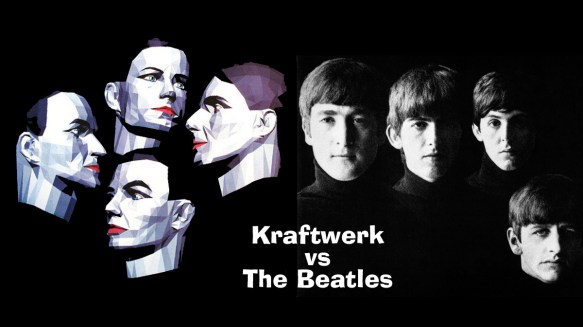
As a GenXer with extensive knowledge about popular music, I find it difficult to resolve this question. The question is, who has had more influence on music and music culture?
This short video piece by DW proudly claims that the answer is Kraftwerk. It’s fun to watch because they didn’t get the same respect in Germany that they first got in places like Detroit, New York and Sao Paulo until many decades later.
I am not sure I can agree with the video or not. I would love to find out what our readers think. Please, by all means, leave a comment below!
“Fly Me to The Moon,” a classic song with a timeless allure, has captured the hearts of generations since its inception. Written by Bart Howard in 1954, this iconic tune has been covered by numerous artists, finding its way into movies, commercials, and cultural references. Let’s delve into the history, significance, and enduring popularity of “Fly Me to The Moon.”
The Origin and Inspiration Bart Howard, the songwriter behind “Fly Me to The Moon,” composed the piece originally titled “In Other Words.” Inspired by the burgeoning space race of the 1950s and 60s, Howard’s lyrics embodied a yearning to escape the confines of Earth and venture into the vast unknown. The song’s title was later changed to the more recognizable “Fly Me to The Moon,” reflecting its dreamy and aspirational essence.
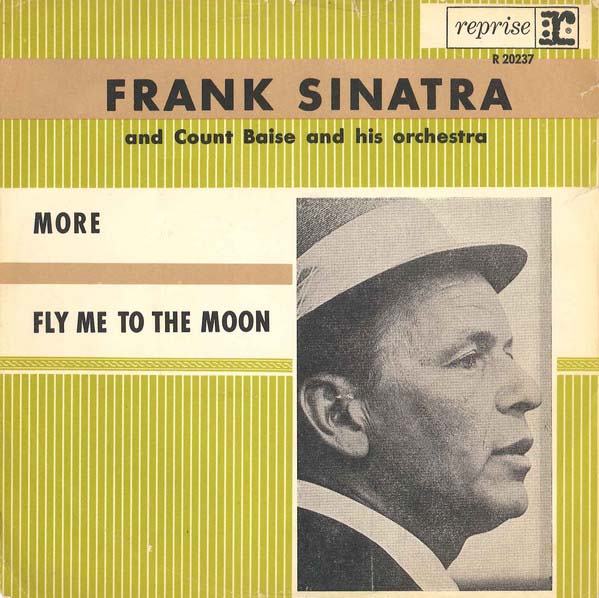
original 7 inch single
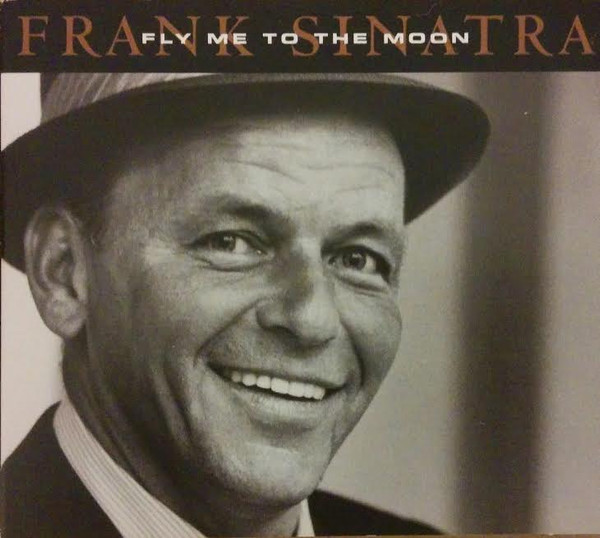
Frank Sinatra’s Signature While the song gained popularity in its early years, it was Frank Sinatra’s rendition that truly catapulted it to stardom. Sinatra’s 1964 recording of “Fly Me to The Moon” became synonymous with the Apollo space missions and the broader spirit of exploration during that era. His velvety voice and impeccable phrasing infused the song with a sense of romance and adventure.
Cultural Impact “Fly Me to The Moon” has transcended its original context to become a cultural touchstone. Its inclusion in various films, TV shows, and commercials has kept the song alive in the collective consciousness. The song’s themes of love, dreams, and escapism make it relatable across generations, ensuring its place in modern pop culture.
Cover Versions and Interpretations Over the years, countless artists have put their own spin on “Fly Me to The Moon,” showcasing its versatility and timelessness. From jazz and pop artists to instrumental ensembles, each interpretation adds a unique layer of emotion and style to the song. The song’s adaptability has allowed it to resonate with different musical sensibilities.
Legacy and Enduring Appeal “Fly Me to The Moon” continues to hold a special place in music history. Its elegant melodies and evocative lyrics evoke a sense of nostalgia while remaining relevant to contemporary audiences. The song’s enduring appeal is a testament to its ability to evoke emotions and capture the imagination, reminding us of the human desire to explore and connect.
Conclusion “Fly Me to The Moon” stands as a testament to the power of music to transcend time and space. From its origins as a reflection of the space race to its status as a romantic and aspirational anthem, the song’s journey has been nothing short of remarkable. With its ability to touch hearts and minds across generations, “Fly Me to The Moon” will likely continue to enchant listeners for many years to come.
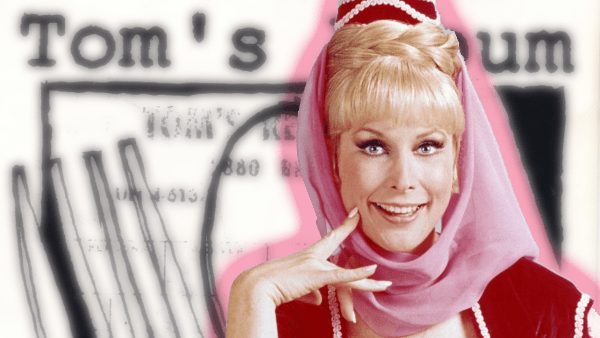
Here we have a goofy mash-up/parody of “Tom’s Diner” with the I Dream of Jeanie TV Show Theme.
The DNA remix, rather than the original, became a big hit in 1990. Remixes were relatively new as a concept in pop music at the time. They sometimes charted along side, or even instead of, the album version.
Reruns of the 1960s classic TV sitcom, I Dream of Jeanie, were airing daily in the USA at the time.
It’s seems that the Jeanie parody actually samples the DNA remix. So in that way this is a mashup. While never officially released as a single but word got around about the parody and It was released on a compilation called Tom’s Album the following year.
The video included here contains scenes from the television series as well the promotional spots for the show that aired on Nickelodeon in the 1990s. It’s not an official video but it seems to have been created by the same guy who first created the mashup.
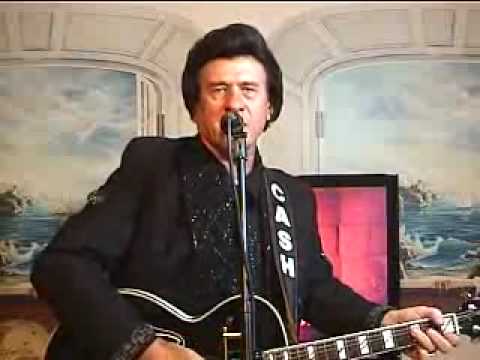
Sometimes you stumble upon things while doing research. Here is a little gem I discovered in the process of researching Johnny Cash. It was performed live to video and uploaded 12 years ago. As the moment it’s gotten 9,000 views. Maybe this is the year it goes viral.
Keith Coleman is a Johnny Cash impersonator and he got creative with one of Cash’s biggest hits to create this track. We love it. In the video he claims that the Christmas lyrics were the original lyrics, but we think that’s a big fat fib.
The real Johnny Cash also recorded Christmas music but there are no holiday parodies of his hit songs to be found. His version of “Blue Christmas” is humorous in how much unalike it is compared to the Elvis Presley version.
“This song certainly did not begin it’s life intended for Halloween. The lyrics even mention summertime. Nevertheless, the obvious connection between Halloween and candy has made the song slowly find its way into Halloween mixes. It is now considered a standard include by DJs worldwide. We probably need more songs about candy.
Most of our readers will remember the New Wave version that came out in 1982. The band was called Bow Wow Wow. The single hit No 9 in the UK and 22 in the USA.
12 inch single cover courtesy of discogs
The song was originally written from the male perspective. The narrator is talking about a woman named Candy. In the Bow Wow Wow version, Candy is now a male but it feels like it’s secretly woman to woman in this listener’s mind. The subtle lesbian-code did not register with the mainstream audience at the time.
But of course the story does not end there. The song was first made famous in 1965 by The Strangeloves. The band used a type of syncopation called The Bo Diddly Beat on the track. Some footage has unearthed of the band performing on TV. It is thought to be from a show called Shindig. Tony Basil might be one of the dancers in this video, though that has not been verified. See if you can spot her.
Since then a number of other artists have performed or recorded this song. A British group called Candy Girls charted with the song in 1996. Aaron Carter performed the vocal modulation for auto-tune back in 2000. I won’t ask you to listen to Charlie XCX murder the tune live but you can find that on YouTube.
You know you’ve made it as an artist if your song gets covered by The Kidz Bop franchise. Looks like The Strangeloves and Bow Wow Wow have really hit the big time now. The Kidz Bop version appears on the 2012 release Halloween Hits.
Don’t forget to tune in to FunHouse Radio for more Halloween Fun!
The Rattles were a rock band from Hamburg Germany. They are best known for the hit single “The Witch” sung in English and released in 1970 at the height of psychedelia.
Here we have a recovered copy of the original music film, probably from a VHS tape. Someone attempted to re-include the music but it falls out of sync eventually. The colors are muted as well and that makes it extra creepy. What’s not to love about this?
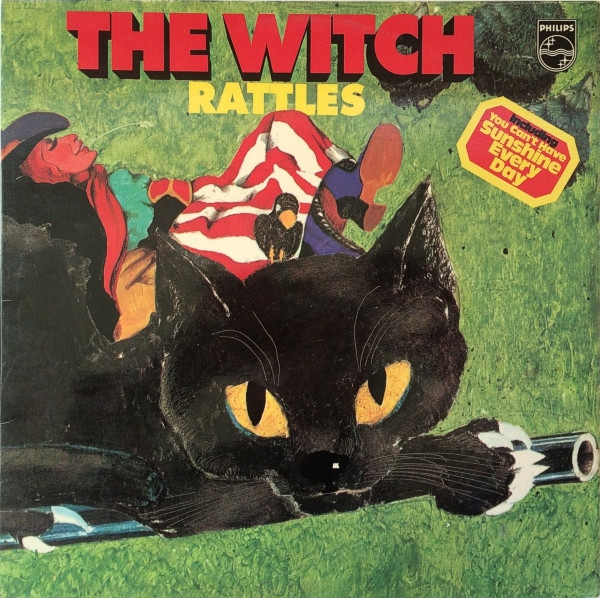
The single reached number 4 in Germany, 8 in the UK and 79 in the US. It was included on the album also called The Witch in 1971. We love the cover-art
courtesy of discogs
Henner Hoir was a band member at the time. He eventually left The Rattles to go solo and perform in other bands. The song was also released under his name and was included on several Henner Hoir greatest hits compilations. For this reason it is frequently credited to him alone rather than the band. It’s kind of odd because he is not even the vocalist. The lead vocals on this track are by Edna Bejarano. She also sang the German version.
Herr Hoir went on to record the song again with an entirely different band called The Rivets. In this writers opinion, it’s a disappointing remake. It’s lacks the energy and pensive character of the original.
The song faded into obscurity in North America but reemerged in recent years as DJS and music fans dig for deeper cuts for their Halloween season playlists. FunHouse Radio is no exception. The remastered English version is in rotation for the season.
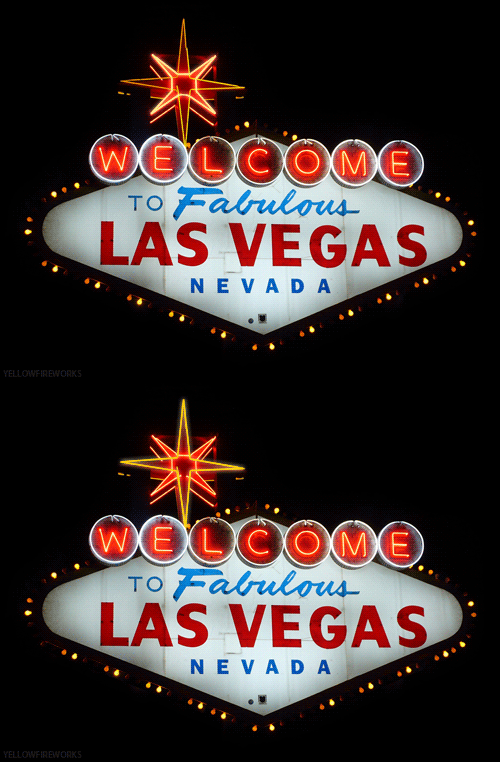
Las Vegas, Nevada is facing a water crisis. Things are not looking good. I think this shows that efforts to terraform other planets in the future may prove successful at first but ultimately fail.
The song “Viva Las Vegas” was written by Doc Pomus & Mort Shuman for Elvis Presley to record as well as for the Movie of the same name featuring Elvis.
In the early days of Punk Rock, a lot of bands actually did cover versions of pop and rock songs from prior decades. They would dare to “punk-up” a song almost as a gag. Sometimes they were just out to piss on the concept of pop music itself.
The problem is that most of these cover versions never made it to release. The band may play the song live but it never appeared on an album or 7 inch record. The reason was because of the licensing fees required to keep it legal. These fees were partly due up-front. This made it a risky investment for a working class band to afford.
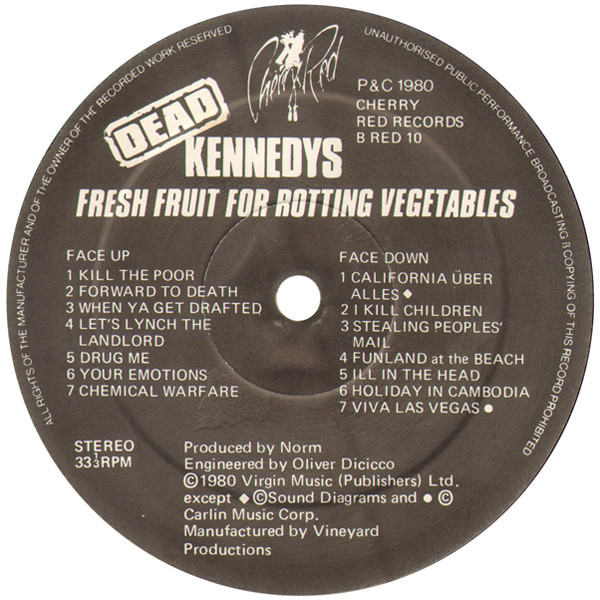
We got lucky with Dead Kennedys. They included “Viva Las Vegas” on their 1980 debut LP, Fresh Fruit For Rotting Vegetables.
The song had been a part of their live set almost since the band’s inception. Their version strips the musical arrangement down and uses a slightly faster tempo, yet maintains the song’s melodic structure. It features satirical lyric changes by Jello Biafra, the lead singer at the time. It was later featured in Terry Gilliam’s film adaptation of Hunter S. Thompson’s Fear and Loathing in Las Vegas.
The band exists today but without Jello. There is bad blood there. A new remaster of the album was just released. The problem here is that Biafra was not consulted and he has been vocal about his dissatisfaction with the results.
I have listened to the new mixes and I concur totally. Stick to the OG mixes. Good luck to Las Vegas with that predicable global warming water crisis thing. I hope that all rich people in charge are properly compensated for their losses when they file with the IRS.


 FunHouse Radio